Death by Careless Driving Compensation (2026 Guide)
Where a relative has died in a road collision, and another driver is suspected of, charged with or convicted of causing death by careless driving, the bereaved family may be entitled to pursue a civil claim for compensation. The criminal case and the compensation claim are separate legal processes; a conviction is not always necessary to establish civil liability. We act throughout England and Wales for bereaved families, dependants and the estates of those who have died. We do not represent drivers accused of criminal driving offences. If the tragic death was caused by the offending driver being charged with dangerous driving, please see our separate page on compensation for death by dangerous driving.
Many of the deaths on UK roads are caused by fatal road accidents due to careless driving. If someone is arrested by the police and found guilty of causing death by careless driving, they may face time in prison. In addition to imprisonment, the culprit may be liable for a civil compensation claim, with damages paid to the victim’s family.
Who Can Claim — Dependents — Deadline for Claiming — How to Claim — What to Do
Definition — Criminal Offences — Process — Penalties — Evidence — Statistics
Inquest Hearings — Life Sentences — Common Causes — Case Study Examples — Claim With Us
Who Can Claim for Careless Driving Compensation?
Careless driving is when a motorist drives without due care and attention to others, falling below the minimum standard expected of a competent driver. If a person loses a loved one due to careless driving, they may be able to file a compensation claim. Compensation damages provide essential support to help families overcome their loss.
A claim can only be considered if the death was caused by another person’s careless driving and a close relative or dependent died as a direct result. Many forms of compensation are available, including the bereavement award and financial and funeral expenses. Claim criteria depend on several factors, including the type of claim and the claimant’s relationship to the deceased. There is also the dependency claim awarded to people who relied on the deceased’s financial support or other essential services.
If you would like bespoke advice on whether you can claim for careless driving compensation, don’t hesitate to contact our experienced solicitors.
Can Dependents of the Deceased Claim Compensation?
If you were the dependent of someone who has tragically lost their life due to careless driving, then you may be eligible for fatal accident compensation. A dependent is typically someone who relies on another person for financial support and care.
Dependency claims are made when a sudden and avoidable death has led to the loss of money and/or services. You can often claim for loss of income, loss of services, or the bereavement award. Compensation is provided to make up for the loss of financial support that a dependent received before the deceased’s death. Dependency claims can also consider non-financial support, like caring for an ill partner or providing child-minding.
Dependents can include, but are not limited to, the following:
- Wife, husband or civil partner
- A person living with the deceased for at least two years
- Parents or other ascendants
- Children or other descendants
- Siblings, uncles or aunts
Please contact us today to talk to our death by careless driving solicitors and learn more about the complete list of what relationships and associations count as being dependent on the deceased.
What to Do if a Loved One Has Died Due to Careless Driving
Losing a loved one in a careless driving accident is a tragic life event, and knowing what to do next may feel overwhelming. While very little can make up for such a loss, there are steps you can take to help protect your family and make it easier to get the answers and support you deserve. First, if you suspect a criminal act, report it to the police and make sure you record all relevant details. If there is an active investigation, try to keep copies of all correspondence, reference numbers, and updates provided by the authorities. These details can be important later in establishing what happened, who was to blame, and whether a compensation claim is possible.
We also highly recommend that you gather and keep any documents related to the death and its financial impact. This could include the death certificate, funeral invoices, proof of lost income or financial dependency, and any evidence showing how the deceased supported their family before their death. If you had to pay for travel, counselling, or other related expenses, keeping a record of these costs can also be highly beneficial.
Seeking legal advice as early as possible can provide you with clarity and support during an extremely difficult time, while helping you submit your claim before any time limitations pass. A specialist solicitor can explain whether you may be able to bring a compensation claim for death by careless driving, who is entitled, and what losses can be recovered – including loss of dependency, funeral expenses, and other financial losses arising from the death.
Families should also be told that support is available beyond the legal process. Bereavement support services, counselling, and professional guidance all play a role in helping relatives cope in the weeks and months ahead.
What is the Deadline for Claiming Compensation?
As with any personal injury or fatal accident claim, you have three years to claim for careless driving compensation. This time limitation starts on the date of death or the date of the accident. The limitation period may be less or more than three years, depending on certain factors, so it’s recommended to seek legal advice to be sure.
Start your claim as soon as possible to increase your chances of success. With more time to work on your claim, solicitors can gather all the evidence they need to achieve the maximum compensation you are owed.
How to Claim Compensation for Death by Careless Driving
Losing a close family member due to someone else’s careless driving can be tough to take. A death such as this can elicit various emotions, including anger, sadness and frustration. It is also not just about strong feelings. The deceased’s loved ones may endure mental health problems, including the physical effects of depression and financial struggles. That’s why we offer free support and legal advice. As specialist fatal claims solicitors, we will do everything to help you claim back compensation for a careless driving accident.
We offer a friendly, personal service, so we welcome families to contact us. Reaching out is entirely non-obligatory, and you won’t be charged a penny. If you are happy to appoint us, we will work on your side to build a strong, winning case in your favour. With our No Win, No Fee death by careless driving solicitors, you won’t pay our fees unless your case wins.
Definition of Causing Death by Careless Driving
Before we go into too much detail, it helps to understand what “causing death by careless driving” means. This is a complex area of law with plenty of debate, so as solicitors, it’s essential that we work to the letter of the law. Several questions help determine whether someone caused an accident through careless driving or is not liable. Likewise, there is a substantial difference between careless and dangerous driving, the latter of which is the more severe offence.
Careless driving is covered under two sections of the Road Traffic Act.
Section 2B of the Road Traffic Act 1988:
“A person who causes the death of another person by driving a mechanically propelled vehicle on a road or other public place without due care and attention, or without reasonable consideration for other persons using the road or place, is guilty of an offence.”
The key takeaway is that careless driving occurs either because of a lack of due care and attention or a lack of reasonable consideration for other people. An example would be driving too close behind another vehicle. While careless driving may seem like a harmless mistake, it is not, especially if it causes death. Motorists are responsible for operating their vehicles safely and legally, ensuring they always drive competently.
Section 3A of the Road Traffic Act 1988:
This section covers motorists who have caused death by careless driving while under the influence of drink or drugs. The sub-sections of this definition include being unfit to drive due to drink or drugs, consuming so much alcohol that it exceeds the prescribed limit, consuming a specified controlled drug that exceeds the specified limit for that drug, failing to provide a specimen, or failing to give permission or a laboratory test of a specimen.
See the Crown Prosecution Service website for more details.
Criminal Offences – Causing Death by Careless Driving
- Causing Death by Careless or Inconsiderate Driving: (Section 2B of the Road Traffic Act 1988, amended by the Road Safety Act 2006, s. 20).
- Causing death by careless driving under the influence of drink or drugs: (Section 3A of the Road Traffic Act (RTA) 1988).
Examples of Careless Driving:
- Driving too close to another vehicle
- Accidentally running through a red light
- Overtaking on the inside
- Turning into the path of another vehicle
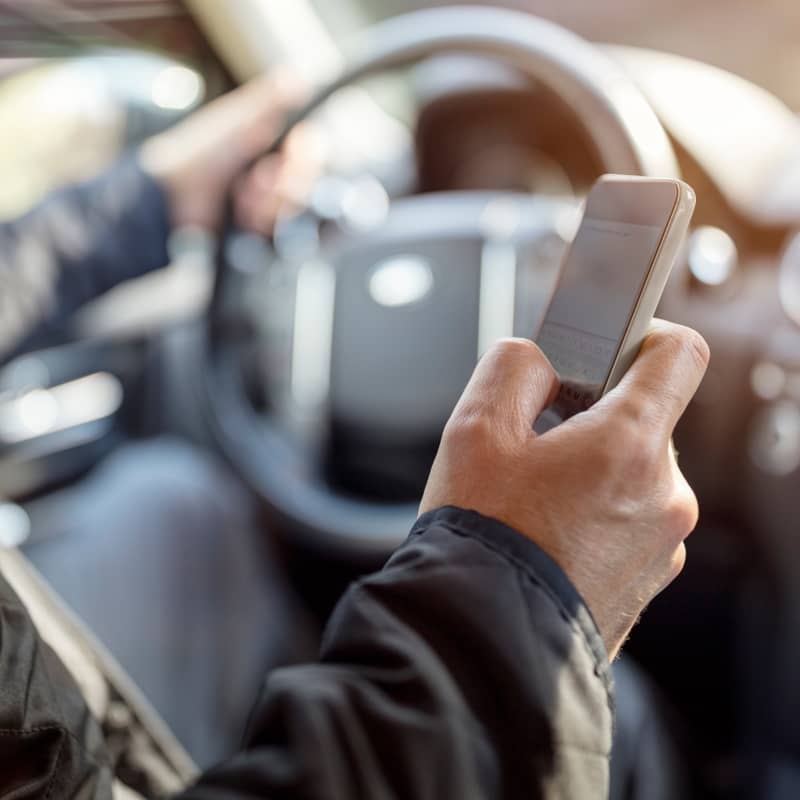
- Being distracted by the radio, mobile phone, eating or smoking
Process Following a Fatal Accident
Firstly, in all road traffic accidents resulting in a fatality, the police conduct an initial investigation to assess the road surface, weather conditions, and the condition of any vehicles involved.
The Crown Prosecution Service will then assess whether any individual involved will face prosecution. Compensation claims can then be made against the party at fault by a claimant who was a dependent family member of the deceased. The police may or may not recommend that the bereaved family seek assistance from an expert fatal accident solicitor, such as this firm. The family must instruct civil fatal injury solicitors without delay to ensure the best possible outcomes.
Penalties Inflicted on the Defendant
Causing death by careless driving:
- Maximum of 5 years in prison, disqualified from driving for a minimum of 1 year
Causing death by careless driving when under the influence of drink or drugs:
- Maximum 14 years in prison, an unlimited fine or both, & disqualified for a minimum of 2 years
What Evidence Do You Need to Support a Careless Driving Claim?
For careless driving claims, you must present strong evidence that, firstly, shows the other party bears some liability and, secondly, the impact it has had on your life. The quality of the evidence can affect whether your compensation claim is successful and how much you may receive. You don’t just want to win your claim; you also want to earn the maximum compensation possible.
There are many types of evidence you can use to build your claim after losing a loved one in a careless driving accident. Your solicitor will help gather the required evidence to prove the other party’s carelessness and why you are eligible for the specified compensation amount, but where possible, some evidence is best obtained early on before appointing a solicitor.
Examples of evidence include:
- Police Reports: A serious road traffic accident leading to fatal injuries will typically involve an emergency police response. Detectives will investigate the accident scene and gather evidence to determine if a crime has been committed. If they conclude careless driving caused it, they will charge the suspect and take them to court. Police reports, including the detective’s assessment of the situation, can be used for your compensation claim. Similarly, a coroner’s report is vital as it outlines how the person died and whether the accident was the primary cause.
- Visual Evidence: Images and video are instrumental in painting a clear picture of the accident. For instance, CCTV or dashcam footage can help show what happened and who was liable. If possible, you should capture images or videos of the scene, including damage. It’s also wise to document visual evidence of injuries immediately after the accident and over the following months if the deceased continued to live.
- Witnesses: Either gather statements from witnesses at the scene of the accident or at least collect their contact details. Witnesses can be crucial in corroborating your story, especially when visual evidence is lacking.
- Medical Records: These reports are valuable in cases such as fatal careless driving accidents, as they document the direct health effects as observed by a neutral medical professional. Medical records will outline the injuries the deceased endured, the treatment they received, and more. This information is strong evidence of the accident’s impact.
- Personal Loss: Whether you are claiming on behalf of a deceased relative or for yourself, such as claiming for loss of dependency, it’s vital to show evidence of personal loss. For example, you may need to show the treatment fees, travel costs, and funeral expenses. Evidence for loss of dependency must show how you depended on the deceased before the accident, whether financially or through services like child care.
Statistics for Careless Driving Deaths
There can be no proper repayment when life is tragically lost in a road traffic accident, yet the law must make every attempt to reimburse those closest to the deceased. To assess whether this happens, several statistics must be considered.
- Between September 2012 & September 2013, there was a 38% increase in official deaths caused by dangerous driving.
- In the same period, deaths caused by careless driving decreased by 14%.
- Only 60% of drivers who have been involved in a traffic accident involving a fatality are prosecuted.
- The average prison sentence for causing death by dangerous driving is four years.
- In 2006, there were 381 convictions in England and Wales for serious driving charges for causing death, but only 58 resulted in a prison sentence of more than five years.
- The number of deaths involving drink/drug drive accidents soared by 26% in 2012.
Analysis of the Statistics
Regarding the sentencing for causing death by dangerous driving, it could be said that an average of 4 years’ imprisonment is not nearly enough, considering an individual has paid the ultimate price due to a defendant’s actions. It could also be argued that, despite no prison sentence being sufficient to compensate for the loss of someone’s life, implementing a maximum prison sentence of 14 years is insufficient, considering there is no maximum prison sentence for murder or manslaughter.
Additionally, when assessing the average prison sentence of 4 years, it could be said that this is far too low considering that someone had died due to dangerous driving. It would be reasonable to expect the average prison sentence to be around half of the maximum sentence, yet the actual average is three years short.
What is the Role of an Inquest Hearing?
When someone has died, authorities will determine whether the death was caused by natural causes or suspicious circumstances. If a death is suspicious or unexplained, then a coroner will perform a thorough investigation to determine the cause.
Coroners are judges tasked with identifying unknown bodies and investigating how death came to be. A coroner will hold an inquest hearing to investigate the manner of a suspicious or unexplained death. They can collect necessary evidence and request that witnesses attend the Coroner’s Court.
In the case of careless driving, a coroner will decide whether or not a death occurred due to natural causes, unlawful killing or accident. Inquest hearings are the first significant step in pursuing compensation for careless driving. However, the coroner’s role is to find facts, not prosecute individuals. Criminal proceedings and/or compensation claims will follow the coroner’s verdict and focus more on apportioning blame.
Can a Conviction Lead to a Life Sentence?
While taking the life of another person is the ultimate crime, this does not mean that the culprit will receive a life sentence. Careless driving is considered an accident rather than an intentional act, as is the more serious charge of dangerous driving. Simply put, being charged with careless driving doesn’t mean you will be charged with murder.
The most severe offence involving death by careless driving is driving while under the influence of alcohol or drugs. This offence comes with a maximum sentence of 14 years’ imprisonment. Other serious offences carry a maximum sentence of 2 to 5 years in prison. Sentences for minor offences can include disqualification, a community sentence, or a fine.
While only very serious offences currently carry a life sentence in the UK, there are suggestions that death by driving may soon be included. New legislation proposed by the government will increase the maximum sentence for causing death by driving from 14 years to a life sentence.
What Are the Common Causes of Causing Death by Careless Driving?
Careless driving is when a motorist drives their vehicle in a manner that is judged to be slightly below that of a competent driver. If you drive carelessly, you do so without due care and attention or reasonable consideration for others. While not as severe as dangerous driving, it is still a serious offence that can sadly lead to death.
Several behaviours fall under the category of careless driving. Below are some of the most common causes.
Distractions
One of the most common examples of careless driving is allowing yourself to be distracted. Motorists must stay focused at all times while operating their vehicles. Taking your eyes off the road for even a split second can have severe consequences and prevent you from reacting to hazards. Distractions can come in many forms, including using a mobile phone, operating a navigation system, eating or drinking, or talking to passengers
Intoxication
Intoxication can include alcohol consumption or taking illegal drugs. It can also include the effects of prescribed medication or illness. Many incidents involving intoxication happen when drivers misjudge or underestimate their limits and tolerance levels. Taking too much of these substances can impair a person’s ability to drive, affecting their awareness, judgement and reactions. Accidents can also happen if a person does not properly research the effects of taking medication. Liability may lie elsewhere if an accident occurs, such as if a doctor or pharmacist fails to warn someone not to drive while on a particular medication.
Avoiding Signals
Another cause of careless driving is failing to follow road traffic signals. The clearest example of this is running a red light. It is a legal requirement to stop as soon as a traffic light turns red. Failing to do so can cause a severe accident when vehicles in other directions begin to move. Similarly, motorists must observe road signs such as speed zones, stop and give way instructions, one-way systems, and roadwork hazards.
Tiredness
Drivers are responsible for ensuring they have adequate energy and concentration levels when on the roads. Feeling tired is careless, as it affects your ability to drive responsibly and safely. Drivers should recognise how tiredness affects their ability and avoid getting behind the wheel if they are not fit to drive. If you are on a long drive, you should take regular breaks and rotate with another legal driver.
Case Study Examples of Causing Death by Careless Driving
Unfortunately, death by careless driving happens on our roads more often than we would like to imagine. To help you understand the severe consequences and compensation results of careless driving, the following section will detail a selection of fatal accidents that have occurred in real life.
Close Friend Killed by Drink Driver
As reported by Chronicle Live, a passenger sadly died when a high-powered Subaru Impreza crashed into a wall in Ryton, Gateshead. The deceased, Callum Gray, was a childhood friend of the driver, Christopher Brown. Mr Brown pleaded guilty to causing death by careless driving while over the drink-drive limit. He reportedly drank a mixture of lager and Coke and ignored advice to leave his car at the pub. While driving at high speeds, the car spun out of control during a turn. Mr Gray died of neck and chest injuries 11 days after the accident. While sentencing Mr Brown, Judge Robert Adams remarked that he appeared to be showing off his high-powered vehicle. He was banned from driving for three years and sentenced to 40 months in prison.
Derby Man Dies After Hit and Run Accident
A 31-year-old man sadly died in November 2023 after being hit by a driver on the busy Pentagon Island junction in Derby. The pedestrian, Grant Sturgess, suffered catastrophic injuries and died at the scene. The driver of the car, Fation Koldashi, fled the scene in his BMW and escaped authorities for four days before being arrested. Mr Sturgess tragically left behind a loving family, including a five-year-old daughter. Evidence showed that Mr Koldashi was driving too close to the vehicle in front, leaving him no time to react to potential hazards ahead. He was charged with causing death by careless driving, along with failing to stop after an accident and failing to report an accident. After pleading guilty, he was sentenced to two years and three months in prison.
Claim With Our Death by Careless Driving Solicitors
At R James Hutcheon Solicitors, we can guarantee that we will do our utmost to reassure and fully support any client who has suffered the bereavement of a loved one following the death caused by the careless driving of someone they were dependent on.
We will ensure the unfair nature of this area of law, in particular, does not leave our clients feeling abandoned. Our work will help mitigate the effects of this unjust concept by helping reimburse clients for their loss, in the hope that they can begin to rebuild their lives.