
Latest News
Keep up-to-date with the latest industry insights








Talk to an expert solicitor
We're ready to help you, speak to a member of our team for free advice
Contact UsFrequently Asked Questions
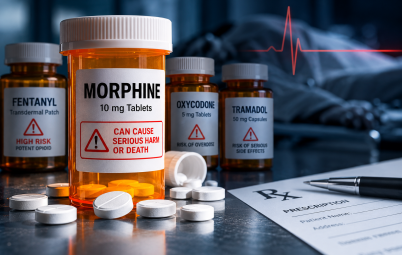
Many prescription medicines can potentially cause serious harm if they are prescribed or dispensed incorrectly. Particular risks can arise with opioids such as morphine, fentanyl, oxycodone and tramadol, as well as anticoagulants such as warfarin and apixaban, insulin and methotrexate.
The fact that a person dies while taking one of these medicines does not establish that the drug caused their death or that there was negligence. The prescription, dosage, other medication, medical history and cause of death all need to be considered.
Our main guide explains more about Medication Error Claims.
An excessive amount of morphine can potentially cause serious opioid toxicity, including dangerous respiratory depression.
However, a death occurring while somebody is taking morphine does not automatically establish an overdose or negligent prescribing.
An investigation may need to consider the dose prescribed, formulation, amount actually taken, other medicines, the patient's underlying health and, where available, toxicology and post-mortem evidence.
Read more about morphine and opioid prescription error claims.
Potentially. Tramadol is an opioid painkiller and excessive doses can cause serious adverse effects.
The risks can become more complicated where tramadol is taken alongside other medicines affecting the central nervous system.
NHS England's Primary Care Patient Safety Strategy discusses a fatal case involving an inadvertent tramadol overdose in combination with other medicines capable of depressing the central nervous system.
Each case nevertheless needs to be considered on its individual medical evidence.
Fentanyl is a potent opioid and inappropriate exposure can potentially cause life-threatening respiratory depression.
Possible issues may include the wrong strength being prescribed or dispensed, inappropriate use in a particular patient, confusion involving formulations or inadequate consideration of other medication.
A fatal outcome does not itself prove negligence. Expert medical evidence would normally be required to determine whether there was a breach of duty and whether it caused or materially contributed to the death.
Potentially. The fact that each medicine is recognised and commonly prescribed does not necessarily mean that every combination is appropriate for every patient.
Drug interactions and the cumulative effects of several medicines may need to be considered, particularly where multiple drugs can cause sedation or affect the central nervous system.
This is one reason medication reviews can be important for patients taking numerous medicines.
Read our guide to dangerous medication combinations and prescription errors.
That may potentially be a dispensing error rather than a prescribing error.
The original prescription can be compared with the pharmacy records, dispensing label, packaging and medication actually supplied.
A pharmacy mistake could involve the wrong medicine, wrong strength, wrong formulation, incorrect instructions or medication intended for another patient.
A compensation claim would normally also require evidence that the dispensing error caused an injury or contributed to the patient's death.
In serious cases, yes. Whether an incorrect dose can cause death depends upon the particular medicine, the extent of the dosage error, how long it continued, the patient's health and other medication being taken.
A dose that is too high can potentially cause toxicity or overdose. A dose that is too low can also be dangerous if it leaves an important underlying condition inadequately treated.
See our guide to wrong dosage medication and drug interaction claims.
Potentially.
Where negligent prescribing, dispensing, administration or monitoring caused or materially contributed to a death, there may be claims on behalf of the deceased's estate and, depending upon the circumstances, claims by qualifying dependants.
Potential claims can arise under the Law Reform (Miscellaneous Provisions) Act 1934 and the Fatal Accidents Act 1976.
Our specialist Fatal Accident Claims website explains fatal medical negligence claims in more detail.
The damages available depend upon the circumstances.
A claim may potentially include losses suffered by the deceased before death and, where the statutory requirements are satisfied, losses suffered by dependants following the death.
These can include financial dependency, loss of services, funeral expenses and the statutory bereavement award for eligible relatives.
The precise heads of loss should be assessed individually rather than assuming that every family is entitled to the same compensation.
Causation is often the critical issue.
It may be necessary to examine the deceased's medical records, complete prescription history, pharmacy dispensing records, medication reviews, hospital and ambulance records, toxicology, post-mortem findings and evidence from any inquest.
Independent medical expert evidence may then be required.
The legal question is not simply whether an error occurred. It is whether, on the balance of probabilities, the negligent error caused or materially contributed to the death.
If there is concern about a possible medication error, it may be sensible to preserve the remaining medication, packaging, blister packs and dispensing labels rather than immediately disposing of them.
Take photographs and keep any medication lists, repeat prescription information and relevant correspondence.
These materials may assist in establishing what was actually supplied and how that compares with the prescription and medical records.
It can be extremely important.
A coroner may consider evidence concerning the medical cause of death, medication, prescribing decisions, toxicology and the circumstances leading to death.
However, an inquest and a civil clinical negligence claim perform different functions. A civil claim will ordinarily require separate consideration of breach of duty, causation and financial loss.
Families concerned about a possible medication error should therefore consider obtaining specialist legal advice rather than waiting for the inquest to answer every question about potential civil liability.
Start Your Claim
We’re ready to start working with you


