Opioid Prescription Errors – Can the Wrong Painkiller Prescription Cause Death?
Prescription medicines are intended to make us better or control an existing medical condition. Yet prescribing, dispensing and monitoring mistakes can occasionally have devastating consequences.
Among the medicines deserving particular attention are opioid painkillers.
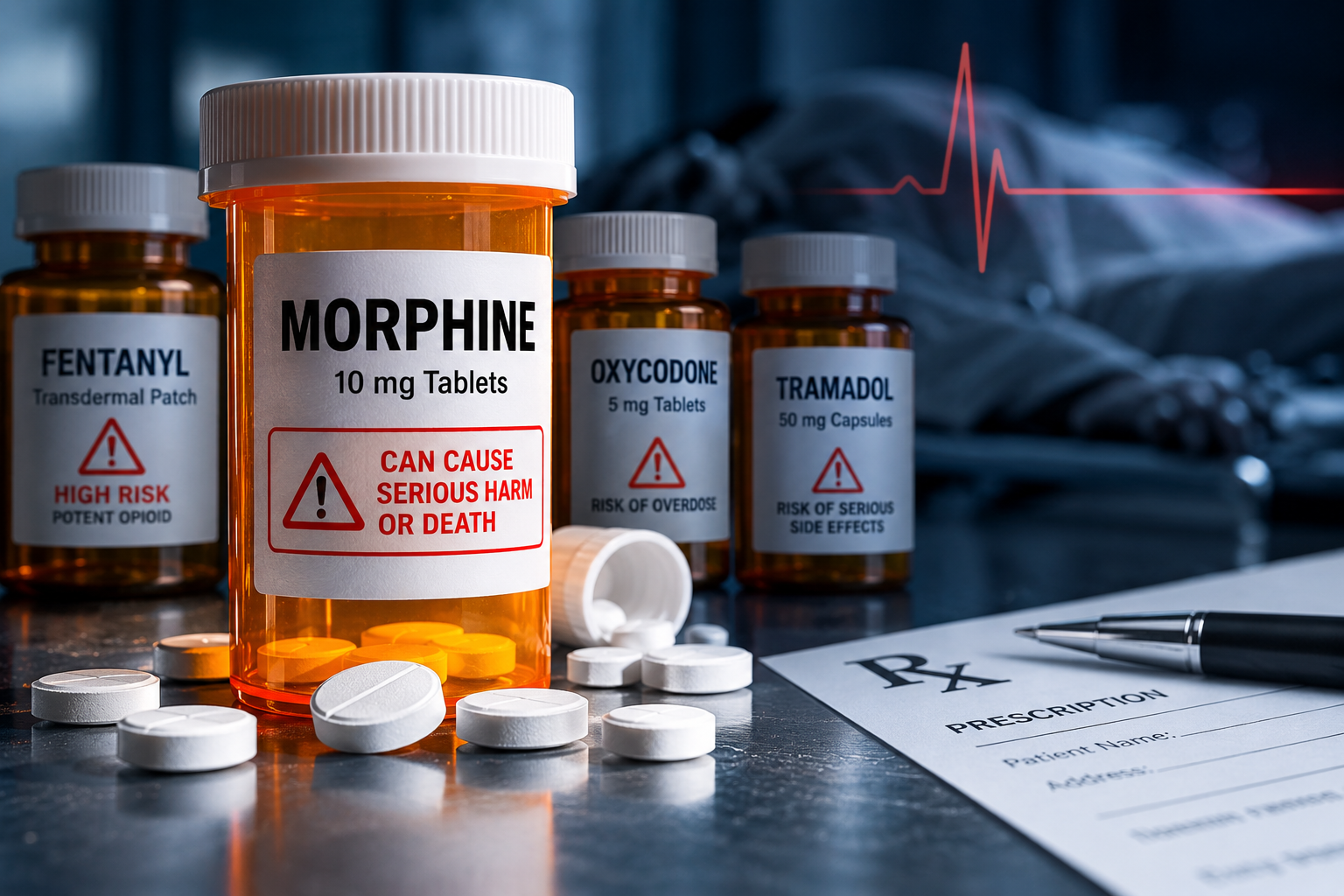
Morphine, tramadol, fentanyl, oxycodone and other opioids can be clinically important medicines when appropriately prescribed. But they are also powerful drugs. Serious harm can potentially occur if the dose is excessive, different medicines interact, treatment continues without appropriate review, or a patient is supplied with medication intended for somebody else.
In the most serious circumstances, medication-related harm can be fatal.
The scale of the wider problem should not be underestimated. NHS England reports that avoidable adverse drug events contribute to more than 1,700 deaths annually.
Its work specifically concerning opioids is also striking. NHS England’s medicines safety programme reports that since an improvement programme to reduce long-term opioid use began in 2021, there are around 160,000 fewer people receiving long-term opioids than would have been expected from previous prescribing trends. NHS England estimates that the programme avoided around 16,000 incidents of harm and saved 2,597 lives.
Those figures do not mean that the deaths were necessarily caused by medical negligence. Nor does a death involving an opioid automatically establish that a doctor or pharmacist did anything wrong.
They do, however, demonstrate why opioid prescribing, dispensing and medication reviews require considerable care.
For a wider explanation of medication negligence, see our main guide to Medication Error Claims.
Why can opioid prescription errors be so dangerous?
Opioids act upon the central nervous system. One of the most serious consequences of excessive opioid exposure is respiratory depression, where breathing becomes dangerously slow or ineffective.
The risk cannot be assessed simply by looking at the name of the medicine.
The patient’s age, general health, dosage, previous exposure to opioids, duration of treatment and other medication can all be relevant.
This becomes particularly important where several medicines capable of producing sedation or depressing the central nervous system are being taken together.
An apparently straightforward prescription may therefore require consideration of the patient’s entire medication regime rather than one drug in isolation.
We examine these wider risks in our guide to dangerous medication combinations and prescription errors.
Which opioid medicines could be involved?
Opioid medication includes drugs such as:
- morphine;
- tramadol;
- fentanyl;
- oxycodone;
- codeine; and
- buprenorphine.
The fact that somebody is prescribed one of these medicines does not mean the prescription is unsafe.
The question in a negligence investigation is much more specific:
Was this particular medicine, at this particular dose and for this particular patient, prescribed, dispensed and monitored with reasonable care?
We have a separate detailed guide dealing specifically with morphine and opioid prescription error claims.
What types of opioid prescription error could cause serious harm?
There is no single type of opioid medication mistake.
Potential problems can include:
- prescribing an excessive dose;
- dispensing the wrong strength;
- giving incorrect dosage instructions;
- confusing different opioid formulations;
- an error when converting a patient from one opioid to another;
- duplicate opioid prescriptions;
- failing to consider other sedating medication;
- failing to consider a patient’s medical history;
- inadequate monitoring;
- continuing long-term medication without an appropriate review; or
- supplying medication intended for another patient.
There is also an important distinction between a prescribing error and a dispensing error.
The pharmacy might accurately dispense precisely what the doctor prescribed, but the prescription itself could be incorrect.
Alternatively, the doctor may issue the correct prescription but the pharmacy supplies a different medicine, strength or dosage instructions.
Establishing where the mistake occurred can therefore be central to identifying responsibility.
Can too much morphine cause death?
Morphine is a powerful opioid. Excessive opioid exposure can potentially cause life-threatening respiratory depression.
But where a patient dies while taking morphine, it would be wrong to assume automatically that morphine caused the death or that somebody was negligent.
A proper investigation may need to consider:
- the dose prescribed;
- the formulation;
- the amount actually taken;
- previous opioid exposure;
- other medication;
- underlying illnesses;
- kidney and liver function where relevant;
- toxicology evidence; and
- post-mortem findings.
Prescription, dispensing and medical records can therefore become particularly important.
For further information about dosage mistakes generally, see our guide to wrong dosage medication claims and dangerous drug interactions.
Contact Us Now To Claim
Tramadol, fentanyl and dangerous combinations of medication
Sometimes the problem is not one medication viewed in isolation.
NHS England’s Primary Care Patient Safety Strategy discusses a fatal case involving a patient prescribed large doses of gabapentin, tramadol and amitriptyline, together with fentanyl patches and diazepam.
The strategy records the conclusion that an inadvertent tramadol overdose, combined with other medicines capable of depressing the central nervous system, probably had a synergistic effect resulting in respiratory depression and death.
This illustrates an important feature of medication safety.
Sometimes the relevant question is not simply:
“Was one drug prescribed incorrectly?”
It may instead be:
“Was the patient’s overall combination of medicines safe, appropriately prescribed and adequately reviewed?”
What about fentanyl patches?
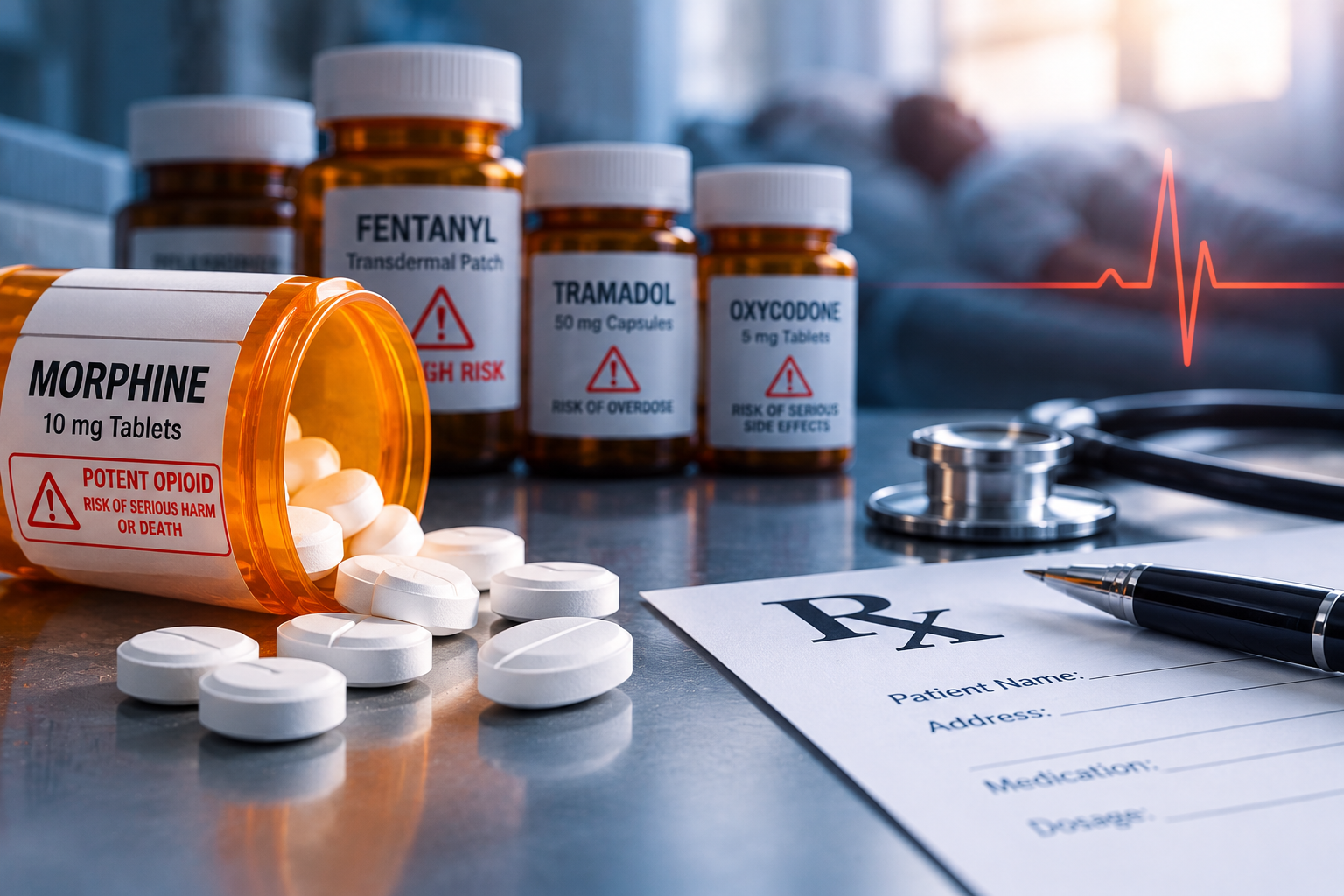
Fentanyl is another potent opioid and can be administered through a transdermal patch.
A potential negligence investigation involving fentanyl might consider the strength prescribed, previous opioid exposure, instructions provided to the patient, other sedating medication and whether the treatment was appropriately reviewed.
Again, the presence of fentanyl does not establish negligence.
Independent expert evidence would ordinarily be required to determine whether prescribing, dispensing or monitoring fell below a reasonable professional standard and whether any failure caused or materially contributed to the patient’s death.
What if the pharmacy dispensed the wrong opioid?
Sometimes the prescription itself is entirely correct, but something goes wrong during dispensing.
Examples might include:
Wrong drug: a patient receives an opioid when another medicine was prescribed.
Wrong strength: the correct opioid is supplied but at a different strength from that prescribed.
Wrong instructions: the medicine is correct but the dispensing instructions result in an excessive dose.
Wrong patient: a patient receives opioid medication prescribed for somebody else.
Wrong formulation: an immediate-release and modified-release preparation is confused.
Where a pharmacy dispensing error causes serious injury or death, it may be necessary to investigate the pharmacy records alongside the original prescription.
Anticoagulants are another important high-risk medication group
Opioids are not the only medicines where an error can potentially have catastrophic consequences.
Anticoagulants, including apixaban, rivaroxaban and warfarin, are another important group.
NHS England describes anticoagulants as high-risk medicines with the potential to cause significant harm if they are taken incorrectly or prescribed inappropriately.
Its community pharmacy audit covered 131,526 patients across 9,303 pharmacies. At the time of the audit, apixaban was the most frequently prescribed anticoagulant in the study at 41.4%, followed by rivaroxaban at 25.2% and warfarin at 20.8%.
These medicines present different risks from opioids.
Excessive anticoagulation can increase the risk of serious bleeding, while inadequate anticoagulation may leave a patient insufficiently protected against potentially dangerous blood clots or stroke.
We explain these risks further in our guides to anticoagulant prescription error claims, apixaban prescription and dosage errors and warfarin overdose and wrong dose claims.
Insulin and methotrexate errors can also be extremely serious
Other medicines repeatedly identified in NHS patient-safety reporting include insulin and methotrexate.
Insulin errors can arise through incorrect dosages, devices or administration.
Methotrexate presents a particularly well-recognised medication-safety issue because, for certain non-cancer conditions, it is normally administered weekly rather than daily.
NHS England’s Never Events data for 2024/25 recorded 11 insulin overdose incidents arising from abbreviations or incorrect devices. It also recorded three incidents involving methotrexate being prescribed and administered more frequently than the intended weekly dose.
These incidents are relatively uncommon, but their inclusion within NHS Never Event reporting illustrates why seemingly small mistakes involving certain medicines can be extremely serious.
My relative died while taking prescription medication – could the medication have contributed?
This can be much more difficult to establish than families initially expect.
The fact that somebody was taking opioids when they died does not establish that the medication caused the death.
Equally, the circumstances may justify further investigation where there was a recent change in medication, an unexpected deterioration, excessive sedation, breathing difficulties or concerns about the way medication was prescribed or monitored.
Depending upon the circumstances, an investigation may examine:
- GP records;
- hospital records;
- prescription history;
- pharmacy dispensing records;
- repeat prescriptions;
- medication reviews;
- changes in dosage;
- other medication being taken;
- toxicology results;
- post-mortem findings;
- ambulance records;
- the death certificate; and
- evidence obtained during an inquest.
The chronology can be particularly revealing.
When was the opioid first prescribed? Was its dosage increased? Who reviewed the medication? Were side effects reported? Was another sedating medicine subsequently introduced? Were repeat prescriptions issued without adequate review?
These are factual questions which should ordinarily be investigated before conclusions about negligence are reached.
Can a family claim compensation following a fatal prescription error?
Potentially.
Where negligent prescribing, dispensing, administration or monitoring causes a patient’s death, claims may arise under the Law Reform (Miscellaneous Provisions) Act 1934 and Fatal Accidents Act 1976.
Depending upon the circumstances, there may be claims on behalf of the deceased’s estate as well as claims by qualifying dependants for losses resulting from the death.
These can potentially include financial dependency, loss of services, funeral expenses and, for eligible relatives, statutory bereavement damages.
Our specialist Fatal Accident Claims website provides further guidance about fatal medical negligence claims.
The first question, however, remains whether there was a negligent medication error and whether that negligence probably caused or materially contributed to the death.
What evidence should a family keep after a suspected fatal medication error?
Where possible, do not immediately dispose of the deceased’s remaining medication or packaging.
Potentially important evidence can include:
- prescription boxes;
- blister packs;
- dispensing labels;
- unused tablets;
- repeat prescription information;
- pharmacy bags;
- medication lists;
- dosage instructions;
- correspondence with the GP, hospital or pharmacy; and
- photographs of the medication.
A complete prescription history can subsequently be compared with GP, hospital and pharmacy records.
Where an inquest is being held, evidence concerning prescribing, dispensing and medication reviews may also become relevant to the coroner’s investigation.
How common are fatal medication errors?
It is important to distinguish deaths involving prescription medicines from deaths caused by negligent medication errors.
They are not the same thing.
Nevertheless, avoidable medicines-related harm remains an important patient-safety issue.
NHS England’s current Quality Strategy states that avoidable adverse drug events contribute to more than 1,700 deaths annually.
NHS England’s medicines-safety programmes have therefore concentrated upon areas including opioids, anticoagulants, methotrexate and problematic polypharmacy.
The message is not that these medicines are inherently unsafe. Many are essential and life-saving treatments.
Rather, the evidence demonstrates why the right medicine, right patient, right dose, appropriate monitoring and regular review can be so important.
Speak to Hutcheon Law about a fatal prescription error
If a family member died unexpectedly while taking prescription medication and you are concerned that the wrong drug, an excessive dose, an unsafe combination of medicines or inadequate monitoring contributed to their death, the circumstances may warrant investigation.
At Hutcheon Law, the starting point should not be to assume that somebody was negligent.
It is to establish what was prescribed, why it was prescribed, what was actually dispensed, how the medication was monitored and what the medical evidence says about the cause of death.
For more information about prescription and dispensing negligence, read our main guide to Medication Error Claims.
Where the suspected medication error resulted in the death of a loved one, read our specialist guide to Fatal Medical Negligence Claims.
Contact Us Now To ClaimImportant information
This article provides general legal information and is not medical advice. The prescription or use of an opioid, anticoagulant, insulin, methotrexate or any other medication does not itself indicate negligent treatment. Patients should not stop, reduce or alter prescribed medication because of information contained in this article without obtaining appropriate medical advice.
Whether a medication error caused or contributed to a death requires consideration of the individual clinical circumstances and, in a legal claim, appropriate independent expert evidence.